
If you’re at the point where bankruptcy feels like the only option left — stop. Read this first. There are paths you may not have considered yet.
Let me talk to you directly for a moment.
If you’re researching alternatives to bankruptcy, you’re probably not in a casual research mode. You’re in the kind of financial situation that keeps you up at night. The calls won’t stop. The balance keeps growing. And somewhere along the way someone mentioned bankruptcy and now you’re wondering if that’s where this ends.
I want you to know two things before we go any further.
First — you’re not alone. Millions of Americans face this exact moment every year. Second — bankruptcy may not be where this ends. There are legitimate, legal alternatives that work for a wide range of situations. And understanding all of them before you make any decision is the most important thing you can do right now.
Let’s go through every option — honestly.
Option 1 — Debt Settlement
Debt settlement is the process of negotiating with creditors to accept less than the full balance owed — typically 40 to 60 cents on the dollar — as full resolution of the debt. Once settled and documented in writing, the account is permanently resolved.
Settlement works best for people with $10,000 or more in unsecured debt — credit cards, personal loans, medical bills — who are struggling to keep up with payments and need a clear path to resolution without the severity of a bankruptcy filing.
- Does not appear on public record like bankruptcy
- Credit impact is significant but recovers within 12 to 24 months of completion
- Reduces the actual amount you owe — not just the interest rate
- Typically completed in 2 to 4 years
- Does not put your assets at risk
For most people who are considering bankruptcy primarily due to unsecured debt — credit cards, medical bills, personal loans — debt settlement is worth exploring seriously before filing.
Option 2 — Debt Management Plan (DMP)
A debt management plan through a nonprofit credit counseling agency allows you to consolidate your unsecured debt into a single monthly payment at a reduced interest rate. You pay back everything you owe — but at better terms.
DMPs work best when your debt is manageable, your income is stable, and you primarily need structure and a lower interest rate to pay it off. They are not effective when your debt is so large that paying the full balance back over 3 to 5 years isn’t realistic.
- No negative public record
- Minimal credit score impact if payments are made on time
- You pay back 100% of what you owe
- Typically takes 3 to 5 years
Option 3 — Debt Consolidation Loan
A debt consolidation loan rolls multiple debts into a single new loan at a lower interest rate. If you qualify for a significantly lower rate, this can reduce your monthly payment and total interest paid.
The catch: qualification requires a decent credit score, and you still owe the full balance. If your credit is already damaged or your debt-to-income ratio is too high, you may not qualify for a rate that actually helps.
- Works best for people with manageable debt and qualifying credit
- You still pay back the full balance
- Not effective if you can’t qualify for a meaningfully lower rate
Option 4 — Negotiating Directly With Creditors
Some creditors — particularly original creditors before accounts become seriously delinquent — offer hardship programs, interest rate reductions, or temporary payment deferrals for borrowers experiencing genuine financial difficulty.
This works best for people who are current or only slightly behind, have a temporary hardship (job loss, medical event), and have a manageable number of accounts. It requires time, persistence, and knowing what to ask for.
Option 5 — Chapter 13 Bankruptcy (Reorganization)
Chapter 13 bankruptcy allows you to restructure your debt into a 3 to 5 year court-supervised repayment plan rather than liquidating assets. You keep your property and pay back a portion of what you owe based on your income and expenses.
Chapter 13 stays on your credit report for 7 years and is a matter of public record. It’s best suited for people who have significant secured debt (like a mortgage they want to keep) and a stable income to support the repayment plan.
Option 6 — Chapter 7 Bankruptcy (Liquidation)
Chapter 7 bankruptcy discharges most unsecured debt within 3 to 6 months. It’s the fastest form of debt elimination available — but it comes with serious consequences.
According to the United States Courts (uscourts.gov), Chapter 7 bankruptcy remains on your credit report for 10 years and is a permanent public record. Some assets may be liquidated depending on your state’s exemption laws. Not all debts can be discharged — federal student loans, child support, recent taxes, and alimony are generally not dischargeable.
Chapter 7 is the right call in extreme situations — total financial collapse, no income, no realistic path to repayment through any other method. For most people with primarily unsecured debt, it is more severe than necessary.
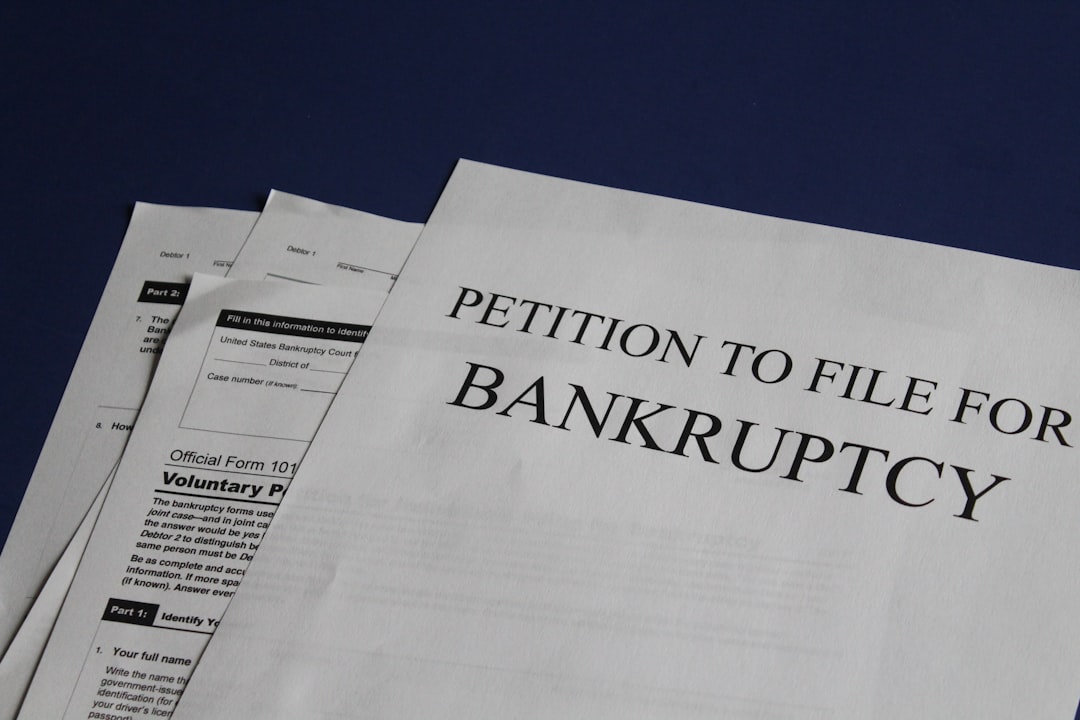
Bankruptcy is a legal sledgehammer. It solves the problem permanently — but the impact on your credit, your public record, and in some cases your assets is real and lasting. It should be the last resort, not the first one.
How to Choose the Right Option
Here’s a simple framework:
- Manageable debt, stable income, current on payments → Debt management plan or direct negotiation
- Significant unsecured debt ($10K+), struggling to keep up, no realistic path to full payoff → Debt settlement
- Significant secured debt (home, car), stable income, want to keep assets → Chapter 13
- Total financial collapse, no income, no assets to protect, no realistic path through any other option → Chapter 7
The worst outcome isn’t bankruptcy or settlement. The worst outcome is making a decision without understanding all your options — and choosing the most severe one when a better fit existed.
The Bottom Line
Bankruptcy is a real option and for some situations it’s the right one. But it is not the only option — and for most people dealing with significant unsecured debt, there is a less severe, less public, and less damaging path available.
You deserve to make this decision with the full picture. Not just the option that came up first, or the one someone mentioned when you were already at your lowest.
Wondering which option fits your situation? Book a free consultation with Boost CredAbility Inc. We’ll look at your specific debt, your income, and your goals — and give you an honest recommendation. Even if that recommendation is bankruptcy, we’ll tell you why.
Sources
- United States Courts — uscourts.gov — Bankruptcy Basics
- Federal Trade Commission — ftc.gov — Debt Relief Services and the Telemarketing Sales Rule
- Consumer Financial Protection Bureau — consumerfinance.gov — Debt Collection and Relief Options
Boost CredAbility Inc. is a credit consulting firm. Debt settlement results vary by individual situation. This article is for informational purposes and does not constitute legal or financial advice.